
Table of Contents
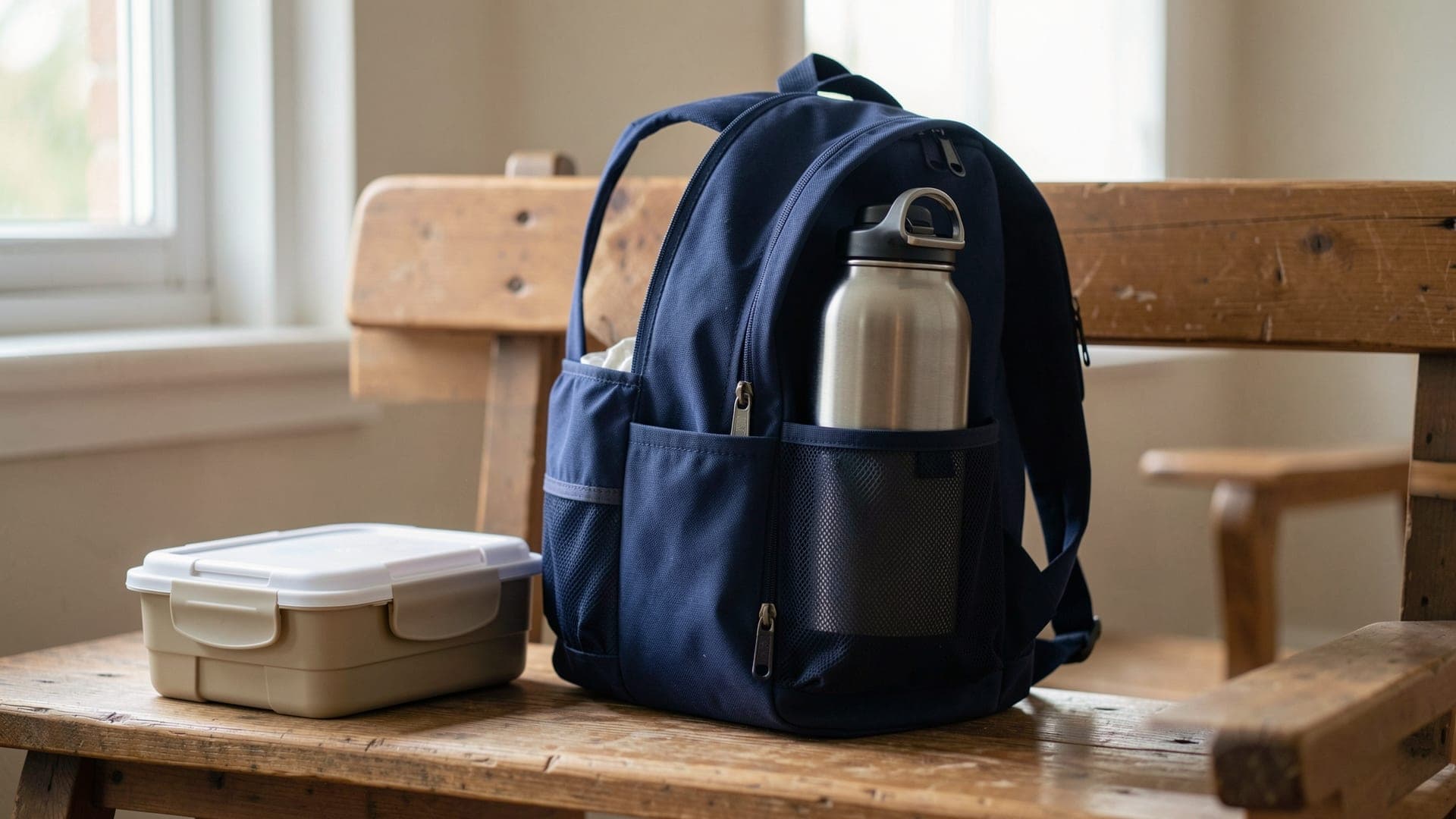
Ask most parents in Lahore what comes back in the school bag at two o'clock and the answer is the same: a lunch box half eaten and a water bottle still full. Children are busy, the school tap is far, and once the weather cools nobody feels thirsty. But a child who drinks little all morning can come home tired, cranky or with a headache. A few simple choices about the bottle and the routine fix most of it.
How much water does a school child need?
There is no single number that fits every child. How much a child needs depends on age, size, the weather and how active the day was, and part of it comes from food and other drinks. As a practical guide for the school day, a 500 ml bottle that comes home empty is a good target for younger children, and 750 ml or more for older children and those who play sport. On hot days, and on days with physical education, send more.
If your child has a medical condition, or their doctor has given advice about fluids, follow that advice rather than any general rule.
Signs a child is not drinking enough
- Dark yellow urine, or going to the toilet much less than usual.
- Headaches, tiredness or poor concentration in the afternoon.
- Dry lips, and a bottle that comes home untouched day after day.
- Drinking a lot all at once as soon as they get home.
These signs have many causes, so treat them as a reason to watch more closely, not a diagnosis. Seek medical help quickly for a child who is unusually drowsy, has stopped passing urine, or has vomiting or diarrhoea and cannot keep fluids down.
Choosing a school water bottle
- Your child should be able to open, drink from and close it without help. Test it before school starts.
- A wide mouth is far easier to clean than a narrow one, and easier to fill.
- Stainless steel is tough and does not hold smells. Food-grade plastic is lighter and cheaper; replace it once it is scratched or cloudy.
- Avoid lids with many small parts and hidden straws if you will not take them apart to wash every day.
- Write your child's name on it. Lost bottles are the most common reason a child goes without water.
Keeping the bottle clean
A water bottle that is topped up for days without washing grows a film inside, especially in the lid and the spout, where it is warm and damp. Wash the bottle, lid and any straw every day with warm water, dish soap and a bottle brush, rinse well, and leave the parts to dry open overnight. Once a week, take the lid fully apart. Throw away a bottle or lid that still smells after washing, or has cracks you cannot clean.
What to put in it
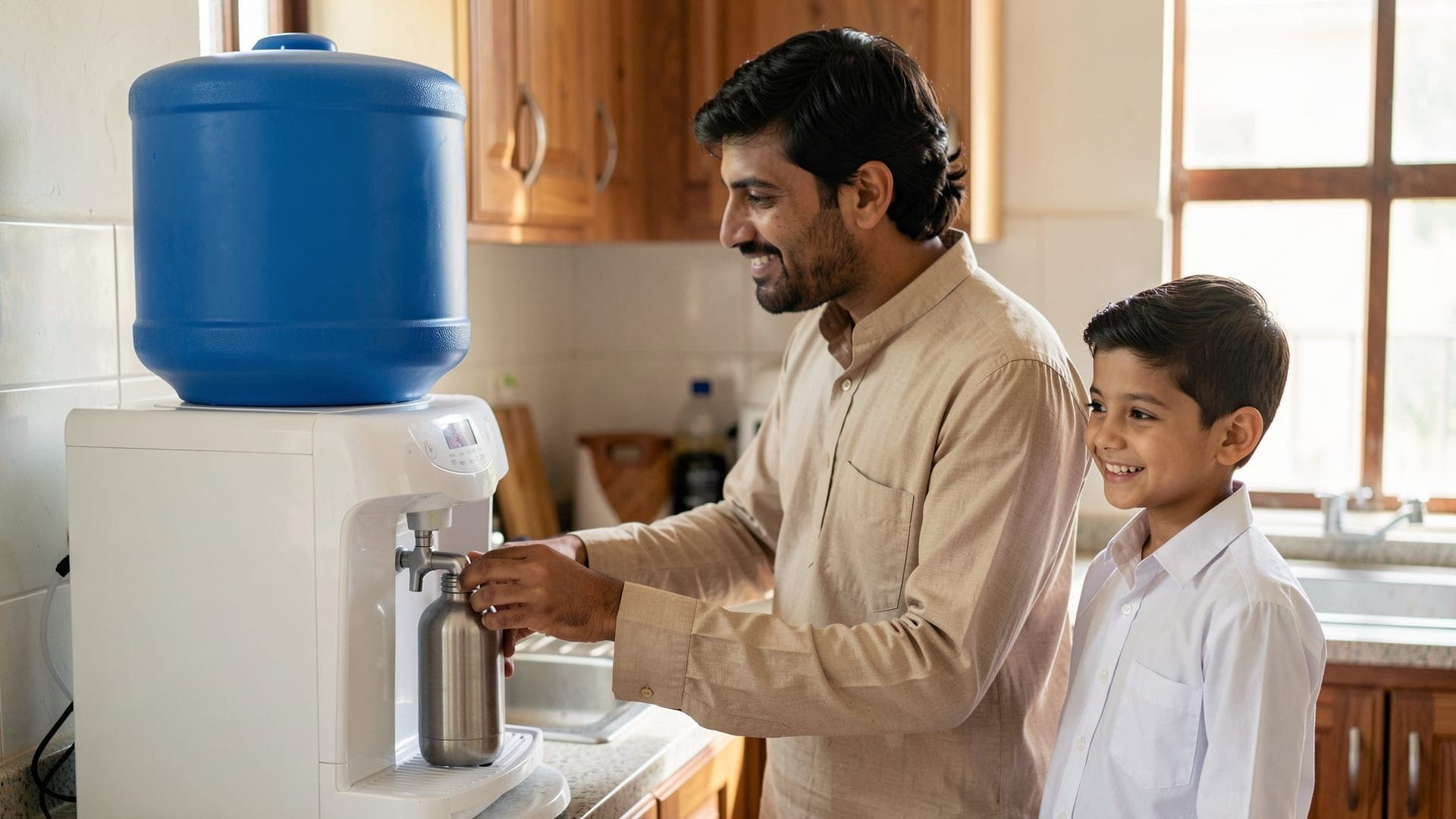
Plain water is the best everyday drink for children. Juices and sweet drinks add sugar that sits on the teeth through the day, so keep them for occasional treats. Fill the bottle with water you trust: boiled and cooled, properly filtered, or sealed bottled water. Fill it in the morning rather than the night before, and pour away anything left when it comes home rather than topping it up.
Habits that get the bottle emptied
- Agree simple times to drink: at morning assembly, at break and before getting into the car or van home.
- Praise an empty bottle rather than scolding a full one.
- Let older children choose their own bottle. A bottle they like is a bottle they use.
- Keep a jug or dispenser at home within your child's reach, so drinking water is easy after school too.
Frequently asked questions
- How much water should my child take to school?
- A 500 ml bottle that comes home empty is a good target for younger children, and 750 ml or more for older children and those who play sport. Send more on hot days and on days with physical education.
- How often should a school water bottle be washed?
- Every day. Wash the bottle, lid and any straw with warm soapy water and a brush, rinse well, and leave the parts to dry open. Take the lid fully apart once a week.
- Is a steel or plastic water bottle better for school?
- Both work. Stainless steel is tougher and does not hold smells; food-grade plastic is lighter and cheaper but should be replaced once it is scratched or cloudy. A wide mouth matters more than the material, because it is easier to clean.
- What are signs my child is not drinking enough water?
- Dark yellow urine, going to the toilet less than usual, afternoon headaches or tiredness, and a bottle that comes home full. Seek medical help quickly for a child who is unusually drowsy or has stopped passing urine.
Aabdar
Team
Lahore's bottled drinking water delivery service — founded 2026, PSQCA-certified, serving 5,000+ homes and offices across 12 areas of the city.

Comments & Discussion