
Table of Contents
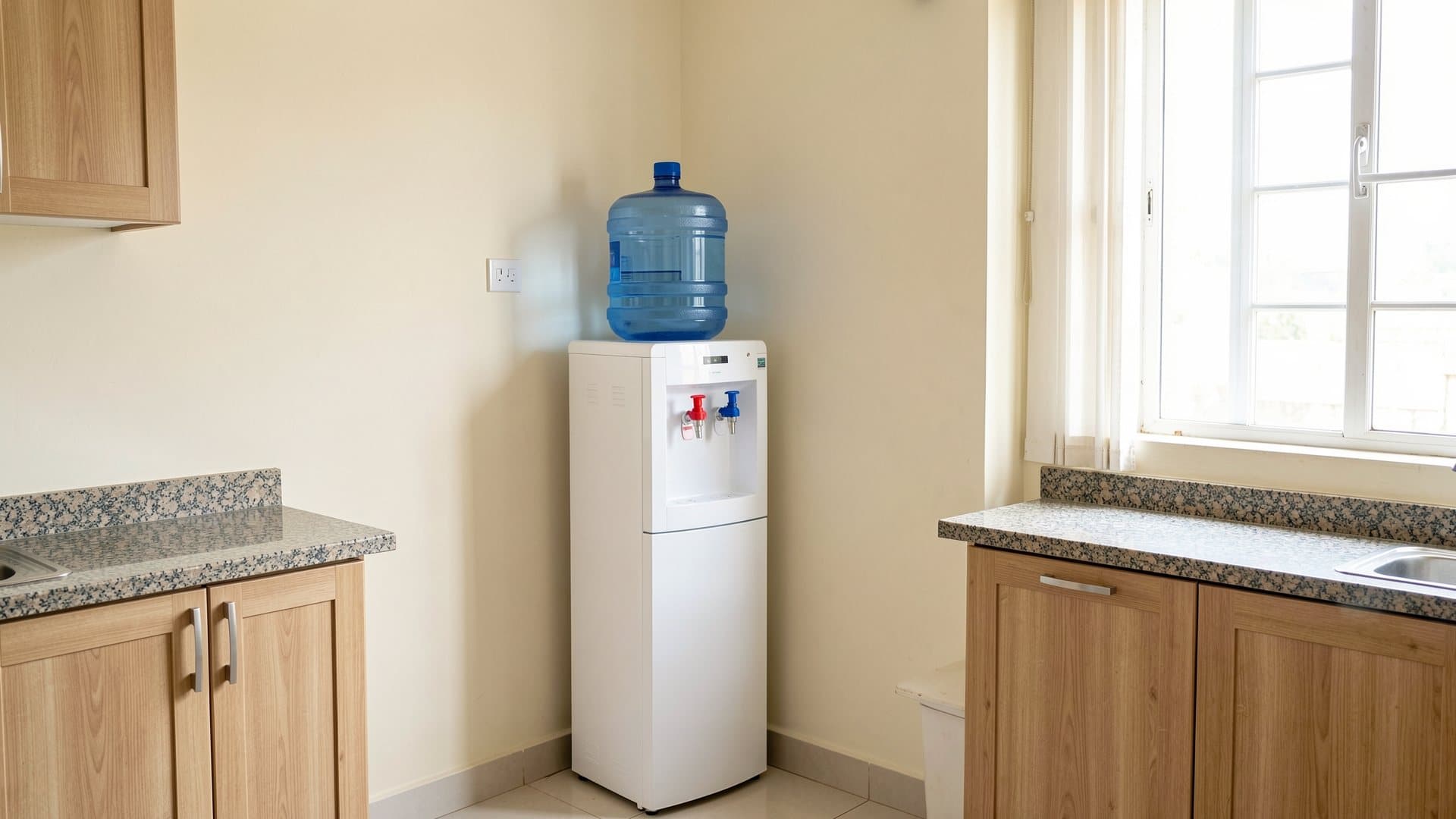
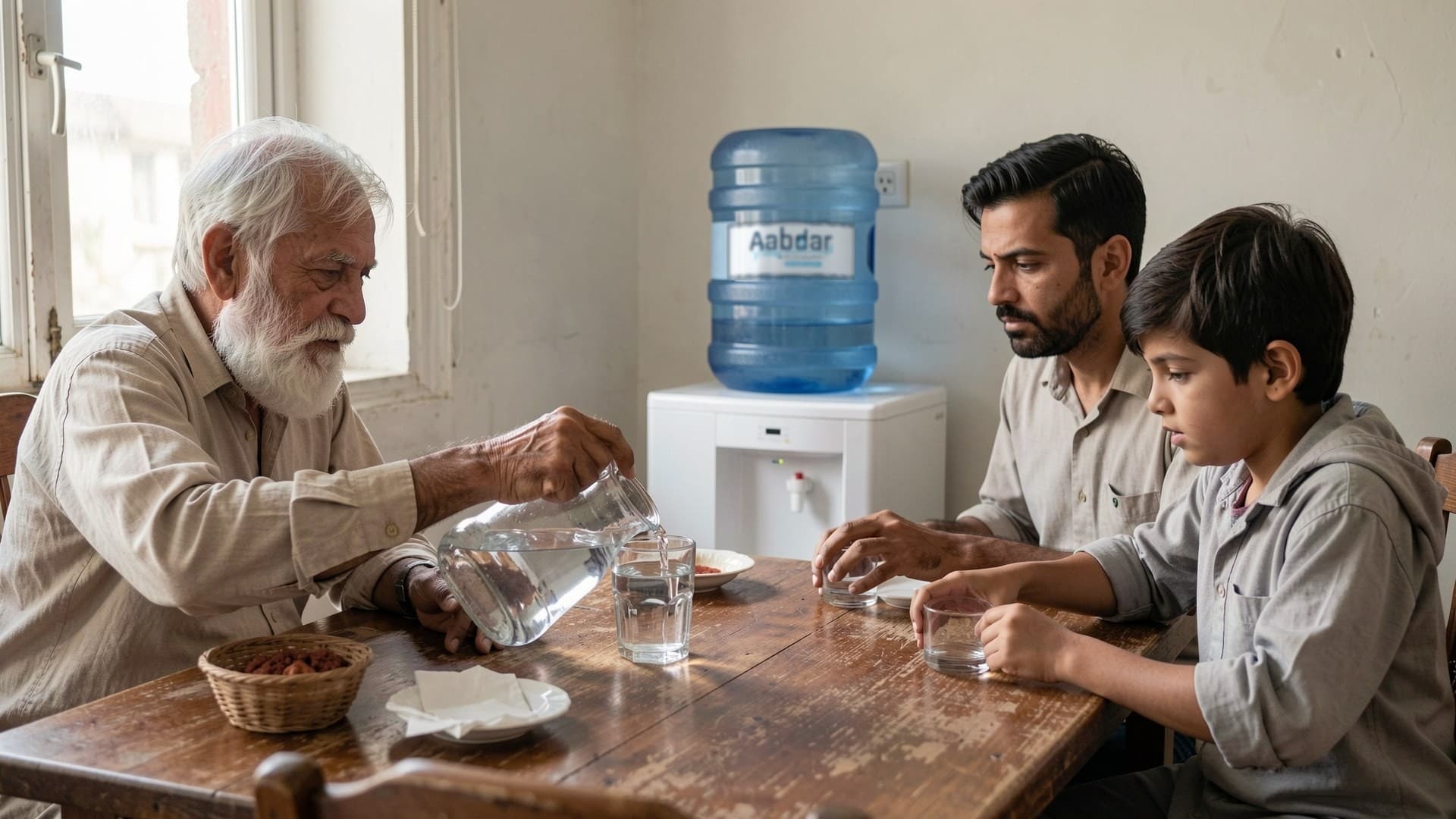
For most homes that switch to 19 litre bottles, the dispenser becomes the most used appliance in the kitchen. It gives cold water in summer, hot water for tea and qehwa in winter, and saves lifting a heavy bottle to pour a glass. It is also the one place where clean water can be spoiled: by sunlight, dust, a dirty tap or a reservoir nobody has opened in a year. This guide covers choosing one, placing it and keeping it clean.
Choosing a dispenser
Dispensers in Pakistani shops come in a few main kinds. The right one depends on how many people drink from it and who will be changing the bottle.
- Tabletop, normal water only: the simplest and cheapest. Fine for one or two people, or as a second point in a bedroom or office.
- Floor-standing, hot and cold: the usual choice for a family. Cold water through summer, hot water for tea, and a cabinet underneath.
- Floor-standing with a fridge or storage cabinet: useful in a small kitchen where space is short.
- Bottom-loading: the bottle goes into a bay at the bottom instead of being lifted on top. Worth it if an older family member changes the bottle.
What to check before you buy
- A child safety lock on the hot tap, if there are children in the house.
- A removable drip tray that is easy to take out and wash.
- Separate switches for heating and cooling, so you can turn off what you are not using.
- A steel inside reservoir rather than plastic, if your budget allows. It is easier to clean.
- That the bottle seat fits a standard 19 litre bottle neck firmly.
Where to put it
Where the dispenser stands decides how clean and how cold your water stays. Sunlight on a bottle warms the water and, over time, encourages algae to grow inside it, which is why a bottle left by a sunny window can turn green.
- Out of direct sunlight, at any time of day.
- Away from the stove, the oven and the back of the fridge, which all give off heat.
- Away from the bathroom and from where shoes, cleaning products or rubbish are kept.
- On a level, firm floor, so a full bottle cannot tip it.
- Near a wall socket, so you do not need an extension cord, and with a little space behind it for air to flow around the cooling unit.
- Somewhere a child cannot easily reach the hot tap, or with the child lock always on.
Changing the bottle the clean way
- Wash your hands first.
- Check the seal on the new bottle is unbroken. If it is not, do not use it and tell your supplier.
- Wipe the neck and cap with a clean cloth before you remove the cap, since dust settles on the outside of every bottle.
- Lift with your legs, not your back, and set it straight onto the seat in one movement.
- Hand the empty bottle back with its cap, so it is not left open in a corner gathering dust.
Everyday care
A few seconds a day keeps most problems away. The drip tray catches every drop that misses a glass, and standing water there grows slime and draws ants within a day or two in Lahore's heat.
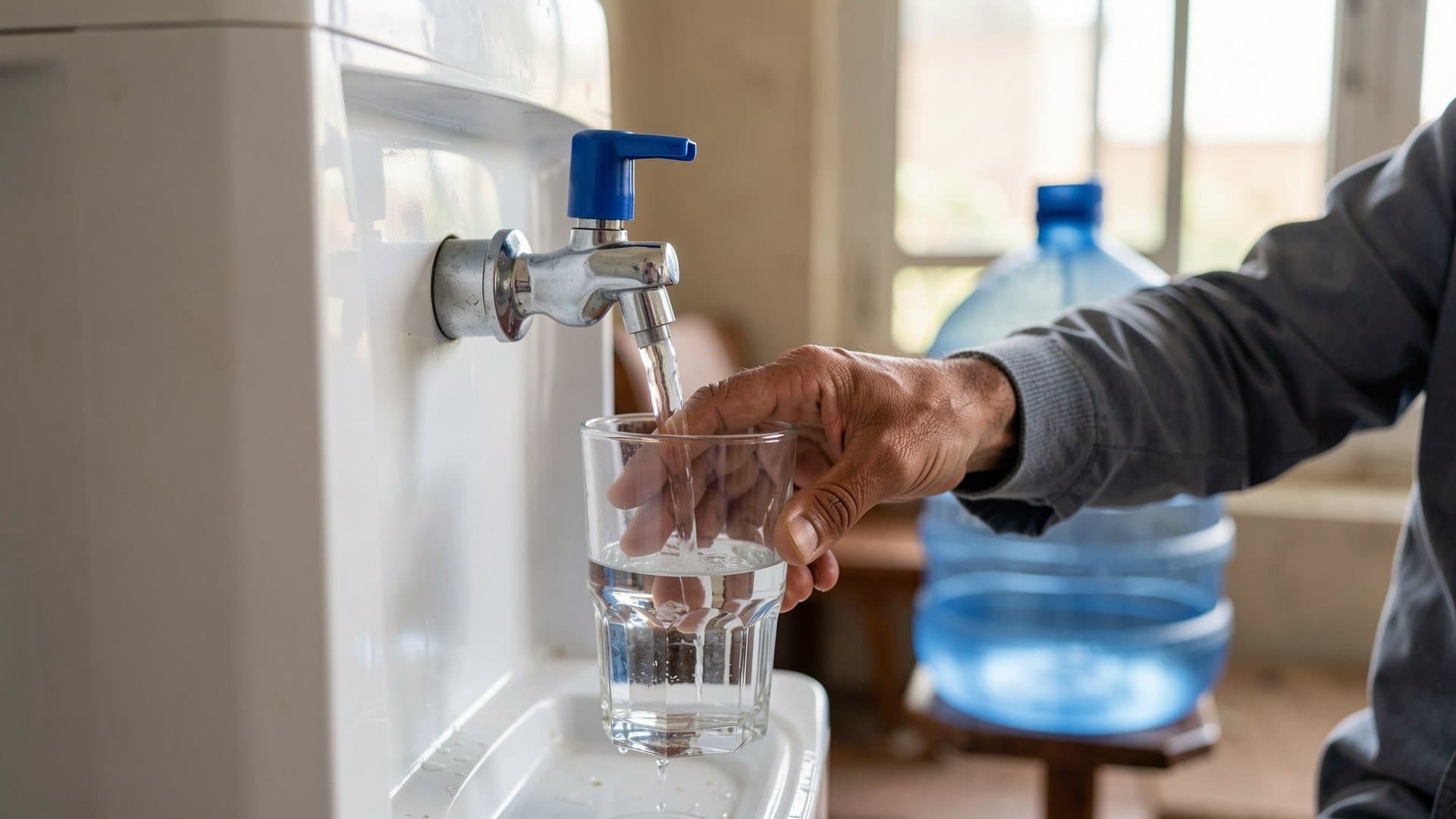
- Empty and rinse the drip tray every day.
- Wipe both taps and the area around them with a clean damp cloth every few days.
- Do not touch the tap's mouth with a glass, a bottle or your fingers when filling.
- Keep the area around the dispenser dry, so there is no damp for insects to come to.
A deeper clean every few weeks
The inside reservoir, the part the water sits in before it reaches the taps, needs a proper clean every few weeks, or whenever the water starts to taste stale. Always follow the instructions that came with your dispenser, but the routine usually looks like this.
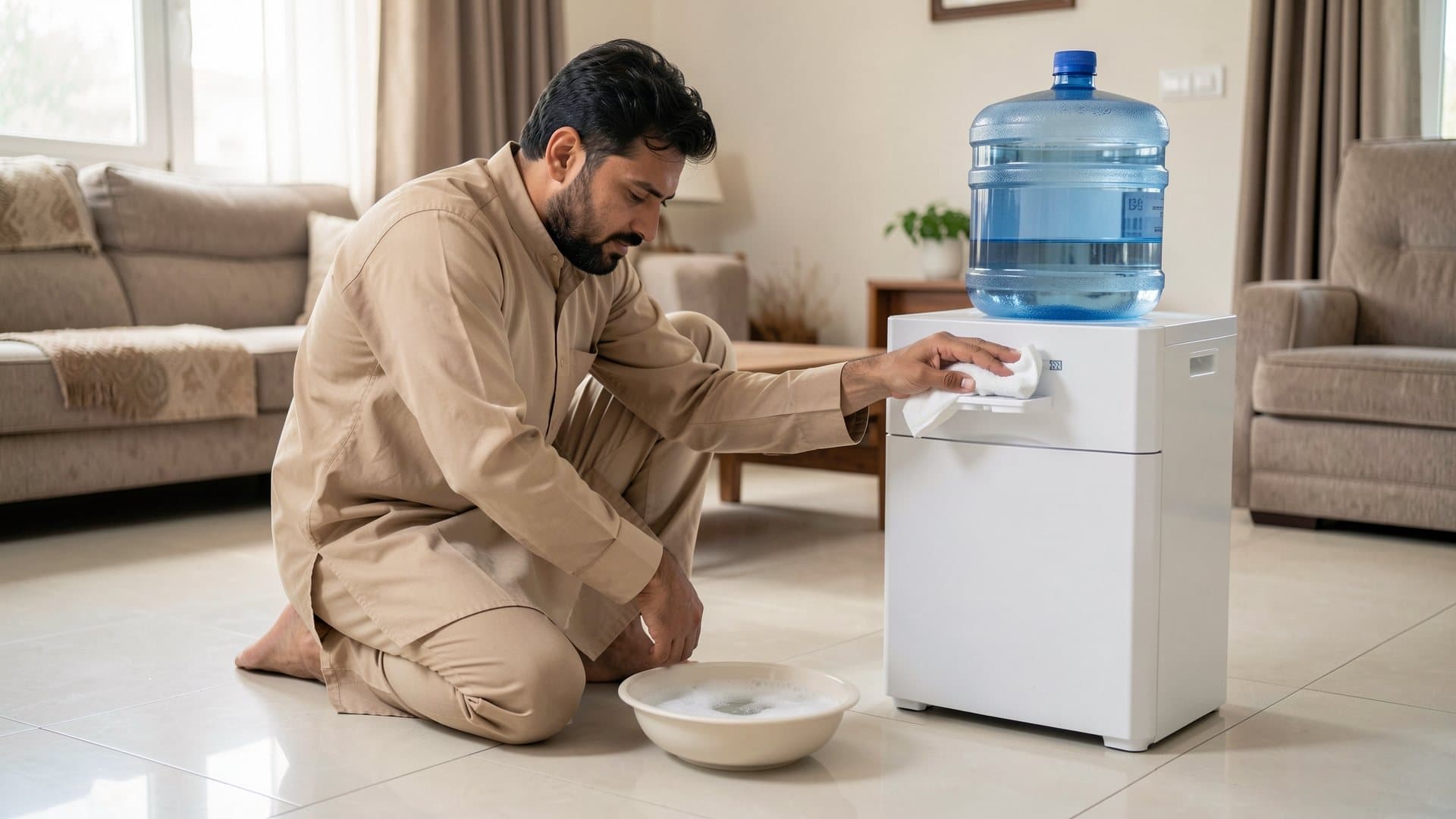
- Switch off and unplug the dispenser, and let any hot water cool.
- Lift off the bottle and drain the rest of the water from both taps into a bucket.
- Wash the bottle seat and drip tray with mild soap and warm water.
- Clean the reservoir with the sanitising solution the maker recommends, or a mild vinegar solution, and let it stand for the time stated.
- Drain it, then rinse by running clean water through the taps several times until no smell or taste remains.
- Put a fresh bottle on, plug in, and wait for the water to cool or heat before drinking.
Clean water is only half the job. The dispenser it passes through has to be clean too.
Signs something is wrong
- Water that tastes or smells stale, of plastic or of anything at all: clean the reservoir.
- Green or slimy patches inside the bottle or seat: the dispenser is in light, or overdue for cleaning.
- Water leaking from under the unit: the bottle may be seated badly or the seat may be cracked.
- Cold water that is no longer cold: check that air can circulate behind the dispenser, and have it serviced if it continues.
The bottom line
Pick a dispenser that suits who changes the bottle and who drinks from it, stand it in a shaded spot away from heat, and give it a daily wipe and a proper clean every few weeks. Those few habits keep the water from a sealed, certified bottle as clean in your glass as it was when it was filled.
Frequently asked questions
- Where should a water dispenser be placed at home?
- In a shaded spot out of direct sunlight, away from the stove and bathroom, on a level floor and near a wall socket. Sunlight warms the water and can make algae grow in the bottle.
- How often should a water dispenser be cleaned?
- Empty the drip tray every day and wipe the taps every few days. Clean and sanitise the inside reservoir every few weeks, or sooner if the water starts to taste stale, following the maker's instructions.
- Why does the water in my bottle turn green?
- Green patches are usually algae, which grows when a bottle stands in light. Move the dispenser out of sunlight and clean the bottle seat and reservoir.
- Is a bottom-loading water dispenser worth it?
- It is worth considering if lifting a full 19 litre bottle onto the top is difficult for anyone in the house, since the bottle slides into a bay at the bottom instead.
- Does Aabdar sell water dispensers?
- We deliver sealed 19 litre bottles that fit standard dispensers sold in Pakistan. Choose a dispenser from any appliance shop that suits your home.
Aabdar
Team
Lahore's bottled drinking water delivery service — founded 2026, PSQCA-certified, serving 5,000+ homes and offices across 12 areas of the city.
Comments & Discussion