
Table of Contents
- 1.The science, briefly: why you need more than you think
- 2.Start with one person, one day
- 3.When the number goes up: special cases worth planning around
- Pregnancy and breastfeeding
- Children and elderly family members
- Exercise, physical work, and illness
- 4.Lahore's seasons change the number more than people expect
- 5.Turning litres into bottles
- 6.Single orders or a plan?
- 7.Offices and second homes
- 8.Reusable bottles, and why the deposit works the way it does
- 9.A few things worth knowing
- 10.Frequently asked questions
- What if my household's usage changes week to week?
- Can I mix drinking water with other household uses?
- What happens if I run out before my next delivery?
- 11.The bottom line
- 12.Comments & Discussion
The most common message we get from new customers isn't about price or delivery times. It's "how many bottles should I order?" Order too few and you're out of water by Sunday evening; order too many and empty bottles start stacking up by the door. The honest answer depends on more than headcount — age, activity, season, and even whether anyone's unwell that week all move the number. Here's how to work it out properly.
The science, briefly: why you need more than you think
Your body loses water constantly, not just through obvious sweating. Breathing, digestion, and simply keeping your skin at body temperature all draw on it continuously, which is why feeling thirsty is already a lagging signal — by the time you notice, you're already a bit behind. Water also isn't optional for anything your body does: it carries nutrients to cells, flushes waste through the kidneys, cushions joints, and is the base fluid for blood volume, which is part of why mild dehydration shows up first as fatigue and headache rather than obvious thirst.
This is general hydration guidance, not medical advice — if you have a kidney, heart, or other condition that affects how much fluid you should drink, follow what your doctor has told you over any rule of thumb in this post.
Start with one person, one day
An adult needs roughly 2 to 3 litres of drinking water a day — and in a Lahore summer, with temperatures past 40°C, that easily climbs to 3.5 litres or more. Children need a little less, around 1 to 1.5 litres. But drinking is only part of it. Most households in Lahore also use bottled water for cooking, tea, and making formula or juice for children, which adds about another litre per person each day.
A practical rule of thumb: plan for about 3 to 3.5 litres per person, per day, for drinking and cooking together.
When the number goes up: special cases worth planning around
Pregnancy and breastfeeding
Pregnancy increases blood volume and the body's overall fluid needs, and breastfeeding adds to that further since milk itself is mostly water — many mothers find they're noticeably thirstier than before, which is the body asking correctly, not a sign something is wrong.
Children and elderly family members
Children regulate body temperature less efficiently than adults, so they can dehydrate faster during play or a hot afternoon even while drinking a seemingly reasonable amount. Elderly family members face the opposite problem: thirst signalling weakens with age, so an elderly parent can already be mildly dehydrated before feeling thirsty at all — worth keeping a glass or bottle visibly within reach rather than waiting for them to ask.
Exercise, physical work, and illness
Anyone doing physical work, exercising, or simply more active than usual needs meaningfully more — easily another litre on a heavy-activity day. Fever, vomiting, or diarrhoea increase fluid loss sharply too, which is exactly when having a full spare bottle already in the house matters most, rather than needing one at the worst possible time.
The right amount of water isn't one number for your household — it's one number most weeks, and noticeably more on a handful of them. Planning for the average and keeping a spare bottle covers both.
Lahore's seasons change the number more than people expect
May through August regularly pushes 40°C and higher, and that heat alone can push an adult's needs from the 2–3 litre baseline toward 4 litres or more, especially for anyone outdoors or without strong air conditioning for most of the day. Winter (December–February) drops needs back toward the lower end of normal — but "lower" doesn't mean low, since heated indoor air and reduced thirst sensation in cooler weather both make it easy to under-drink without feeling any different. The shoulder months (March–April, September–November) tend to sit in the middle, which is also when most households' actual usage is closest to the simple per-person averages below.

Turning litres into bottles
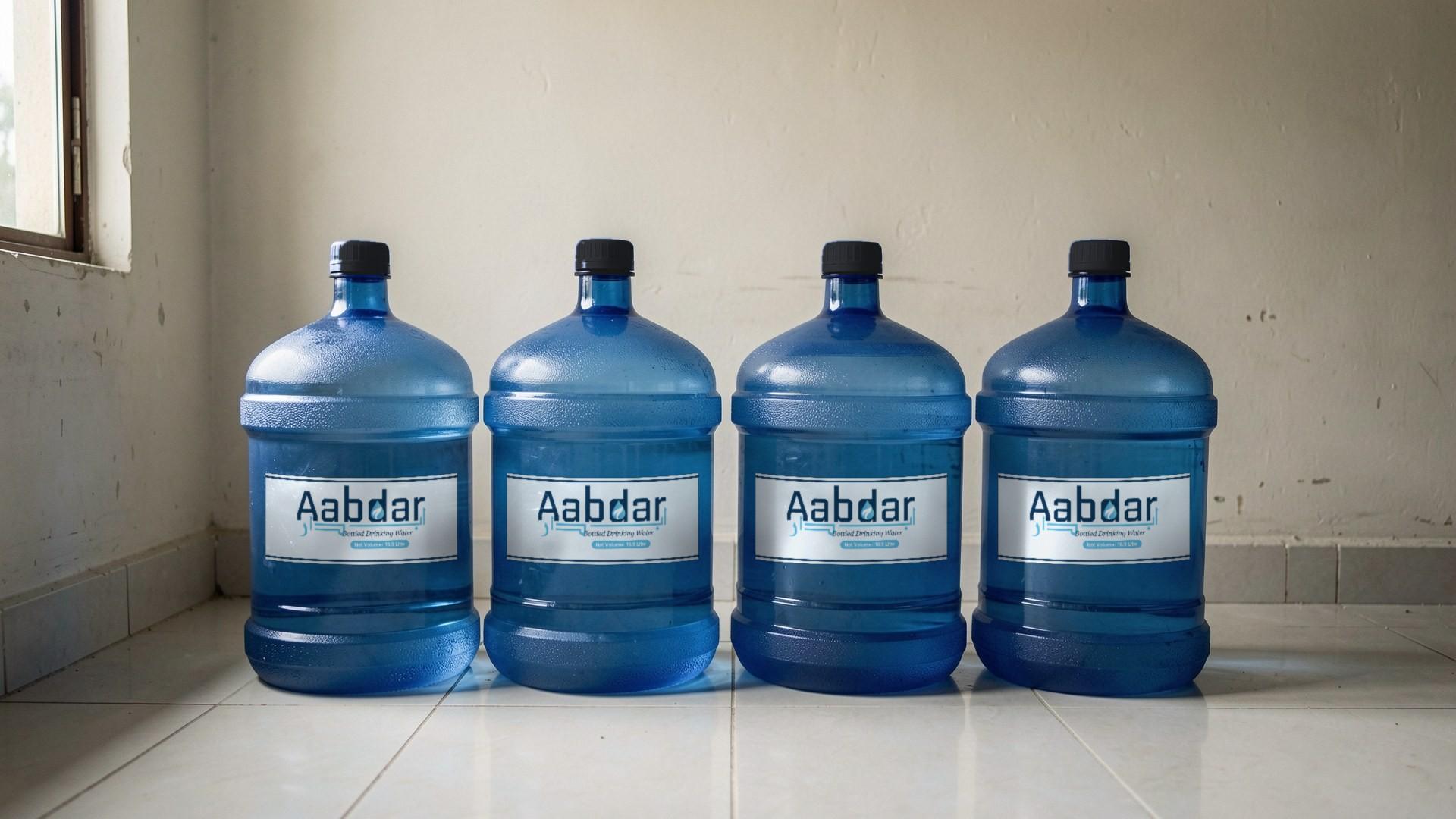
Our standard bottle holds 18.9 litres — the familiar 19-litre dispenser bottle. Using 3 to 3.5 litres per person a day, here's roughly what a week looks like:
- 1–2 people (a couple, or someone living alone): about 2 bottles a week
- 3–4 people (a small family): about 4 to 5 bottles a week
- 5–6 people (a larger family, or grandparents at home): about 6 to 8 bottles a week
- 7 or more: about 9 bottles a week and up — tell us your household size and we'll help you size it
These are starting points, not rules. If you only drink bottled water and cook with tap or filtered water, you'll sit at the lower end. If guests visit often, it's the middle of June, or someone in the house is pregnant, recovering from illness, or simply more active than usual, lean toward the higher end.
Single orders or a plan?
Once you know how many bottles you go through, the choice is simple. A plan is a set number of deliveries on a fixed day, usually a week apart — each plan shows how many — paid for once instead of order by order. When its deliveries are done the plan is complete: nothing renews by itself, and to carry on you message us and we start it again.
- Single orders suit you if your usage changes a lot, you're new and still finding your number, or you'd rather pay as you go.
- A plan suits you if your household is settled into a routine: you arrange its deliveries once, and it costs less than the same bottles ordered one at a time.
- A plan is not a long contract: you can cancel anytime, and ask for a different date for a delivery when you are away.
Offices and second homes
Offices follow the same arithmetic, but count staff who are in on a normal working day rather than everyone on the payroll — most people drink 1 to 1.5 litres during office hours. If you need water at more than one place — your home and your shop, or your house and your parents' — message us and our team can set up a plan for each location under your one account.
Reusable bottles, and why the deposit works the way it does
A single-use plastic water bottle is used once and thrown away; a 19L dispenser bottle in a subscription system is designed to be refilled dozens of times over its working life, which is the whole reason the economics and the packaging look different from the small bottles on a supermarket shelf. That's also why the deposit exists rather than the bottle's full replacement cost being folded permanently into what you pay per delivery — you're paying for the water each time, and for the bottle itself only once, got back in full when it's returned.
A few things worth knowing
- 19L bottles carry a one-time refundable deposit, returned in full when you hand the bottles back.
- Our rider collects your empties when he drops off the full ones, so the bottles don't pile up.
- Keep one full bottle spare. It covers a heatwave, unexpected guests, illness in the house, or a delivery day that falls on a holiday.
- Not sure after the first month? Tell us how many bottles were left over — or how early you ran out — and we'll adjust your plan.
Frequently asked questions
What if my household's usage changes week to week?
Tell us. You're never locked into a fixed number permanently — message us that your week looked different and we'll adjust the next delivery rather than you carrying either a shortage or a surplus forward.
Can I mix drinking water with other household uses?
Most households use bottled water for drinking, cooking, tea, and preparing food or formula, and tap or filtered water for everything else (washing, cleaning). That split is already built into the 3–3.5 litre per person estimate above — it's not purely drinking water, it's drinking-plus-cooking.
What happens if I run out before my next delivery?
Message us and we'll get an extra bottle to you — this is also exactly the situation a kept spare bottle is meant to prevent, which is why we suggest keeping one on hand rather than cutting it as close as possible to your next scheduled visit.
The bottom line
Count the people at home, allow 3 to 3.5 litres each per day (more in summer, more for anyone pregnant, very young, elderly, active, or unwell that week), and divide a week's worth by 19. That's your number of bottles a week. Order single bottles while you're still finding your rhythm and take a plan once you have — and if you'd rather not do the maths at all, send us your household size and we'll suggest a plan.
Aabdar
Team
Lahore's bottled drinking water delivery service — founded 2026, PSQCA-certified, serving 5,000+ homes and offices across 12 areas of the city.

Comments & Discussion