Table of Contents
- 1.What TDS is
- 2.How a TDS meter works, and what it cannot see
- 3.What a TDS number tells you
- 4.A low number is not the same as clean
- 5.What pH is
- 6.What else decides how water tastes
- 7.What to ask a supplier instead
- 8.Using a TDS meter sensibly
- 9.The bottom line
- 10.Frequently asked questions
- 11.Comments & Discussion
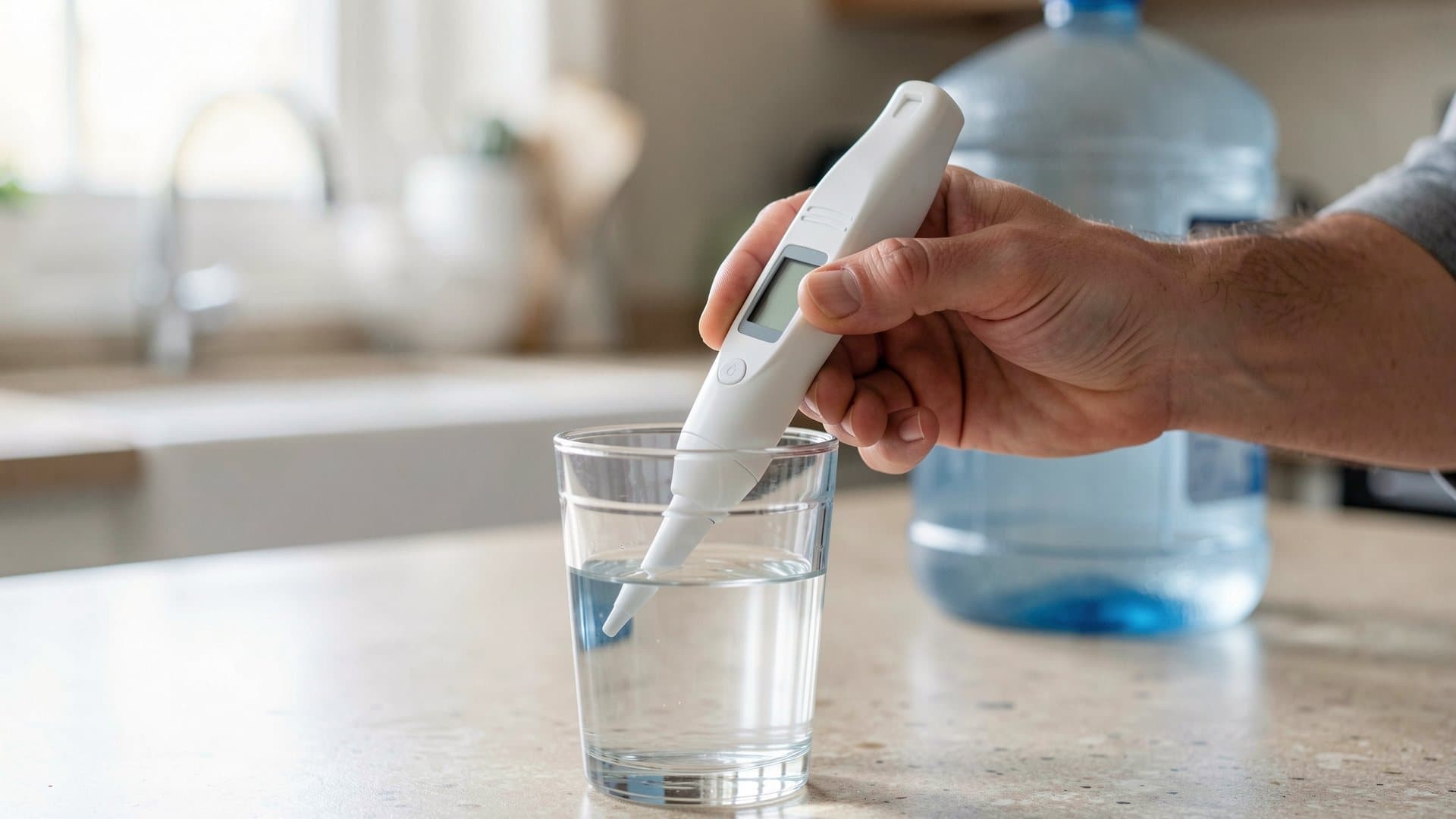
Walk into any shop that sells water filters in Lahore and you will see a small white pen being dipped into glasses of water. The salesman shows you a number on its screen, says that yours is too high, and offers a machine to bring it down. TDS has become the one number many families judge their drinking water by. It is a useful number, but it answers only one question, and mistaking it for the answer to every question is how people end up trusting the wrong water or worrying about the right water.
What TDS is
TDS stands for total dissolved solids. It is everything dissolved in the water that you cannot see: calcium, magnesium, sodium, potassium, chlorides, sulphates, bicarbonates and so on. It is counted in milligrams per litre (mg/L), which is the same as parts per million (ppm).
Some of that is harmless and even pleasant. The minerals in spring water and in many tube-well supplies are the reason that water tastes like something. Rain and distilled water have almost none, and taste flat for the same reason.
How a TDS meter works, and what it cannot see
A handheld meter does not weigh the dissolved solids. It passes a small current through the water and measures how easily it flows. The more dissolved salts and minerals there are, the better the water conducts, and the meter converts that into a TDS number using a fixed factor.
That is its limit. The meter gives one total, and it cannot say whether the number comes from harmless calcium or from something harmful. It cannot detect bacteria and viruses at all, because germs do not change how water conducts. It also cannot see harmful chemicals present in tiny amounts. Arsenic, for example, is a health concern at about ten micrograms per litre, which is a thousand times too small to move a TDS reading.
What a TDS number tells you
The World Health Organization has described how TDS affects taste. Water below about 300 mg/L is generally rated excellent to drink, and the taste gets worse as the number rises, becoming unpalatable above roughly 1,000 mg/L. Pakistan's national drinking water standards use 1,000 mg/L as the upper limit.
- Below 300: clean and light tasting. Very low numbers, under about 50, taste flat.
- 300 to 600: a normal, pleasant range for drinking water.
- 600 to 1,000: noticeable mineral or salty taste, and it leaves scale on kettles and taps.
- Above 1,000: above Pakistan's limit, and it usually tastes salty or bitter.
These are guides to taste and to scaling in pipes and appliances, not a sorting of safe from unsafe water.
A low number is not the same as clean
This is the most common mistake. A family tests its tap water, sees a high number and buys a filter, then tests the filtered water, sees a low number and relaxes. But the low number only shows that dissolved salts were removed. A badly maintained RO system with an old, contaminated cartridge can give a low TDS reading and carry bacteria.
TDS tells you how salty or mineral-rich water is. It does not tell you whether it is safe to drink.
The opposite is also true. Water with a TDS of 400 from a certified, tested source can be perfectly safe, while a 40 from a neglected filter might not be. A high reading is a reason to look into the water. A low one is not a reason to stop looking.
What pH is
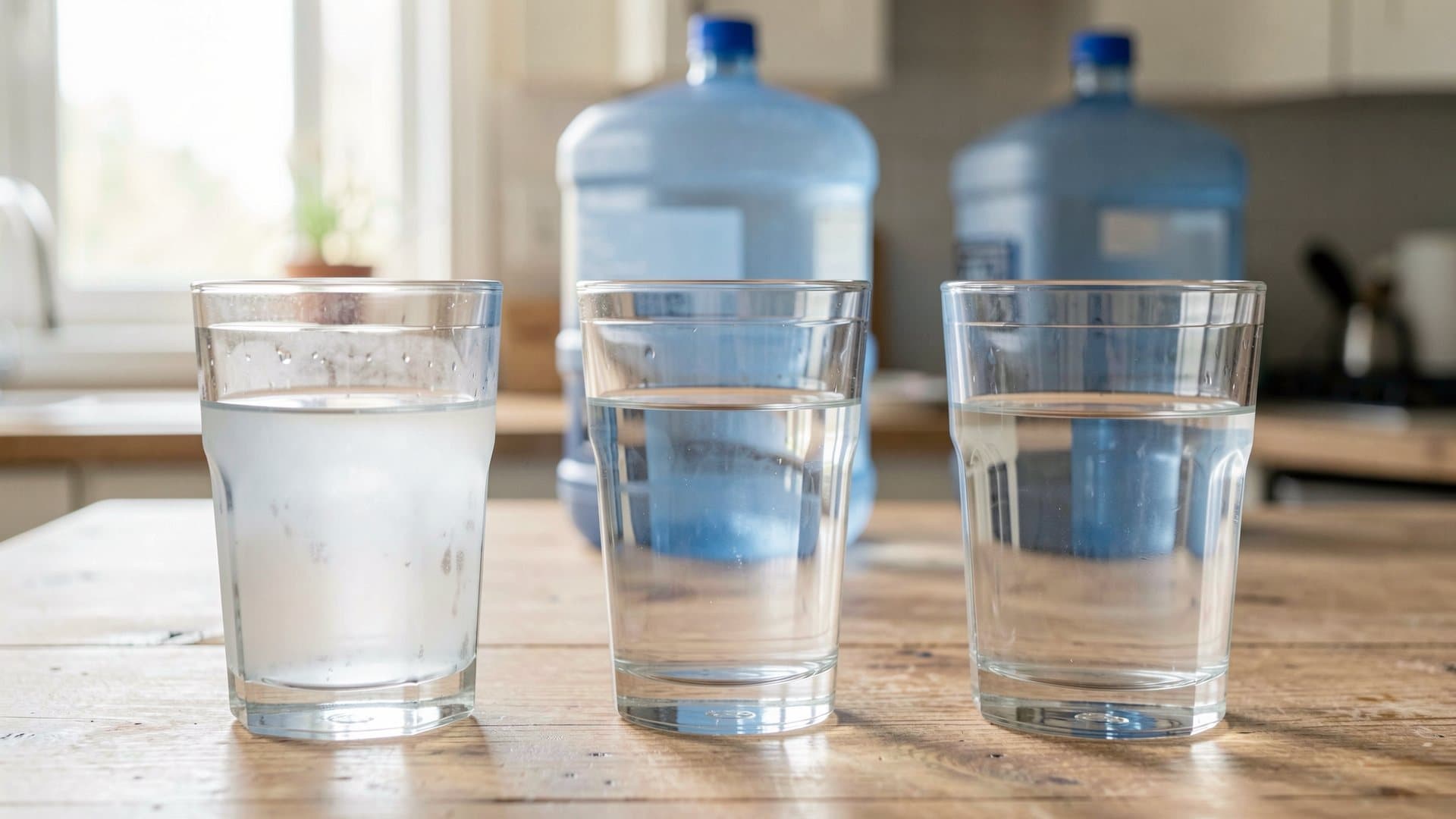
pH is a scale from 0 to 14 that shows how acidic or alkaline a liquid is. Seven is neutral, below seven is acidic and above seven is alkaline. Most drinking water falls between about 6.5 and 8.5, and Pakistan's drinking water standards use that range.
There is no health-based limit on pH in drinking water. Its importance is in the water's behaviour: water that is too acidic can corrode pipes and pick up metals from them, and water that is too alkaline can taste bitter and leave scale. Claims that very alkaline water cures or prevents illness are not supported by solid evidence, and an ordinary pH inside the normal range is fine.
What else decides how water tastes
If your water tastes odd and the TDS looks normal, the cause is often something else.
- Chlorine: used to disinfect tap water, and noticeable to many people.
- Temperature: warm water tastes flatter and more stale than cold.
- A dirty dispenser, jug or tank, which can give water a stale or musty taste. Our guide to home dispensers covers cleaning.
- Water that has been standing a long time in an open container.
What to ask a supplier instead
If you want to compare drinking water, look beyond a pen reading. A reliable supplier should be able to show you:
- A recent laboratory report, with a date, from an accredited lab.
- Results for bacteria (such as coliforms and E. coli) and for chemicals, not only TDS and pH.
- The certifications and licence numbers they hold, which you can check yourself.
- How often the water is tested, and what happens to a batch that fails.
Using a TDS meter sensibly
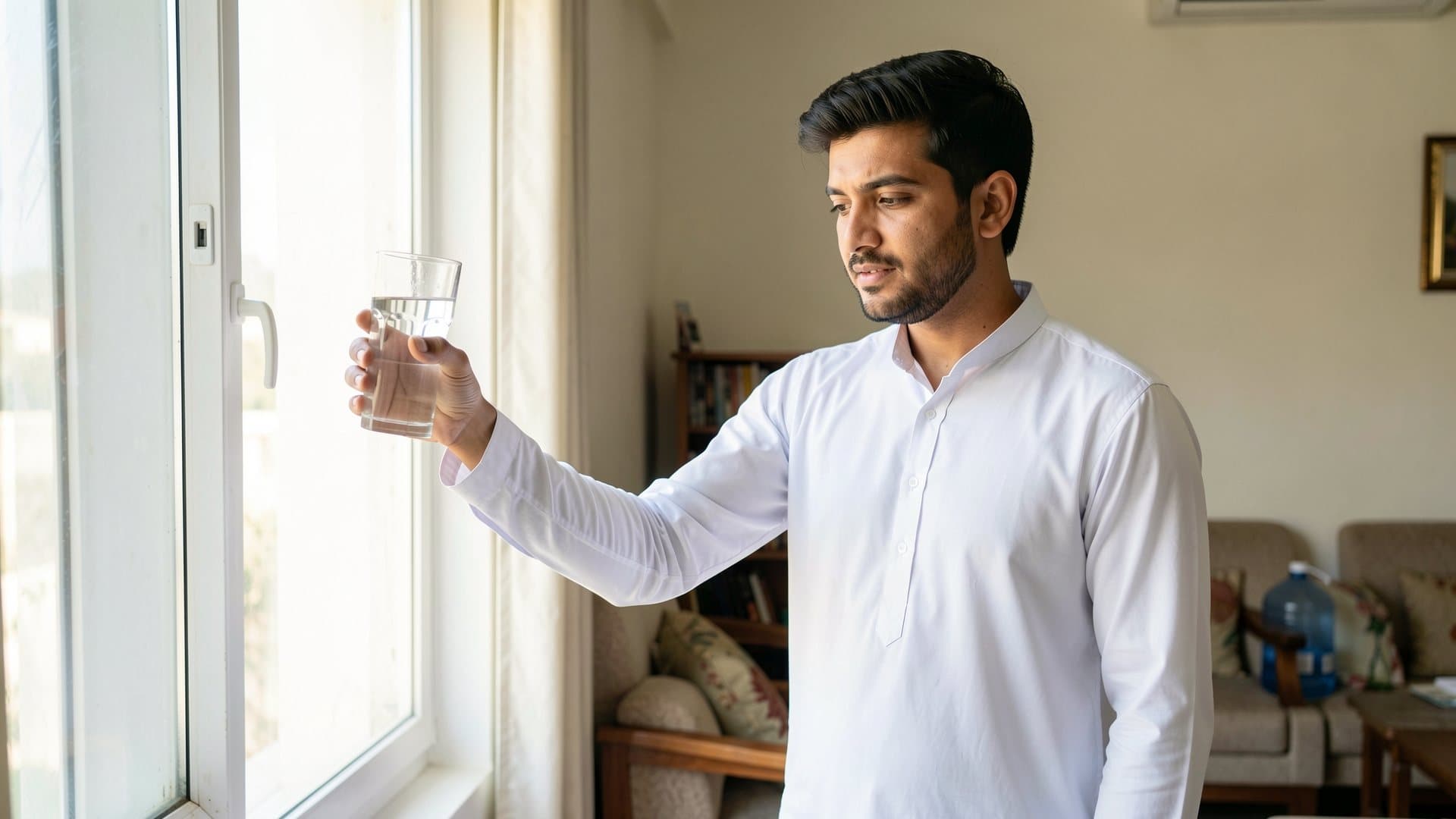
- Rinse the pen in the water you are about to test, and wipe it dry afterwards.
- Test at the same temperature each time, since warm water reads higher.
- Use it to spot a sudden change, such as a filter that has stopped working, rather than to rank brands.
- Never use it to decide that water is safe to drink.
The bottom line
TDS and pH are quick, cheap checks of how water tastes and behaves. They are worth knowing, and a sudden change in either is worth looking into. They are not tests of safety. For that you need a laboratory report covering bacteria and chemicals, and a supplier who is happy to show it to you.
Frequently asked questions
- What does TDS mean in drinking water?
- TDS means total dissolved solids: all the minerals and salts dissolved in the water, measured in milligrams per litre (mg/L), the same as parts per million (ppm).
- What is a good TDS level for drinking water?
- The WHO rates water below about 300 mg/L as excellent for taste, and taste worsens as the number rises. Pakistan's national drinking water standards set 1,000 mg/L as the upper limit. TDS describes taste, not safety.
- Does low TDS mean the water is safe?
- No. A TDS meter cannot detect bacteria, viruses or small amounts of harmful chemicals such as arsenic. Water with low TDS can still be unsafe, for example from a poorly maintained filter.
- What pH should drinking water have?
- Usually between 6.5 and 8.5, which is also the range in Pakistan's drinking water standards. There is no health-based limit, but water outside it can corrode pipes or taste bitter.
- How can I tell if my drinking water is really safe?
- Ask for a recent laboratory report from an accredited lab that covers bacteria and chemicals, and check the supplier's certifications and licence numbers. A TDS pen cannot confirm safety.
Aabdar
Team
Lahore's bottled drinking water delivery service — founded 2026, PSQCA-certified, serving 5,000+ homes and offices across 12 areas of the city.
Comments & Discussion