
Table of Contents
- 1.Why dengue is a water problem at home
- 2.When the risk is highest in Lahore
- 3.Where it breeds around the house
- 4.Your water tank comes first
- 5.Drums, buckets and stored water
- 6.Small places people forget
- 7.Your drinking water is not the problem, if it is sealed
- 8.A ten-minute weekly routine
- 9.Protect your family from bites too
- 10.When to see a doctor
- 11.Frequently asked questions
- 12.Comments & Discussion
Every autumn, Lahore's hospitals fill with dengue patients. The mosquito that carries it does not come from the nullah down the road. It breeds in clean, still water, often in the tanks, drums, buckets and plant saucers inside our own homes. Because storing water is part of daily life in the city, dengue season is a water-storage question as much as a health one. This guide shows where the mosquito breeds around a house and how to stop it.
Why dengue is a water problem at home
Dengue is spread by the Aedes mosquito, a small black mosquito with white markings on its legs that bites mostly during the day, especially early morning and late afternoon. Unlike many other mosquitoes, it prefers clean water to lay its eggs in, and it needs very little: a bottle cap's worth of water left for a week is enough for eggs to hatch into new mosquitoes.
Its eggs stick to the inside walls of containers just above the waterline and can survive dry for months. When the container fills again, they hatch. That is why emptying a container is not enough on its own; it also needs to be scrubbed.
When the risk is highest in Lahore
Cases usually begin to climb after the monsoon rains, when there is standing water everywhere, and stay high through the warm weeks of autumn, roughly September to November. They fall once nights turn properly cold. The Punjab government runs anti-dengue campaigns every year in this period, and the advice they give households is the same as below: find standing water and get rid of it.
Where it breeds around the house
- Rooftop and underground water tanks with a missing, cracked or loose lid.
- Open drums, buckets and tubs used to store water for washing or for when the supply is off.
- Air cooler trays, and water left in coolers that are no longer in use after summer.
- Saucers under flower pots, and vases or bottles with plants growing in water.
- Pet water bowls and bird baths that are not changed every day or two.
- Old tyres, broken pots, tins and plastic sheets on the roof that collect rainwater.
- The drip tray under a fridge or a water dispenser, and the outlet tray of an air conditioner.
Your water tank comes first
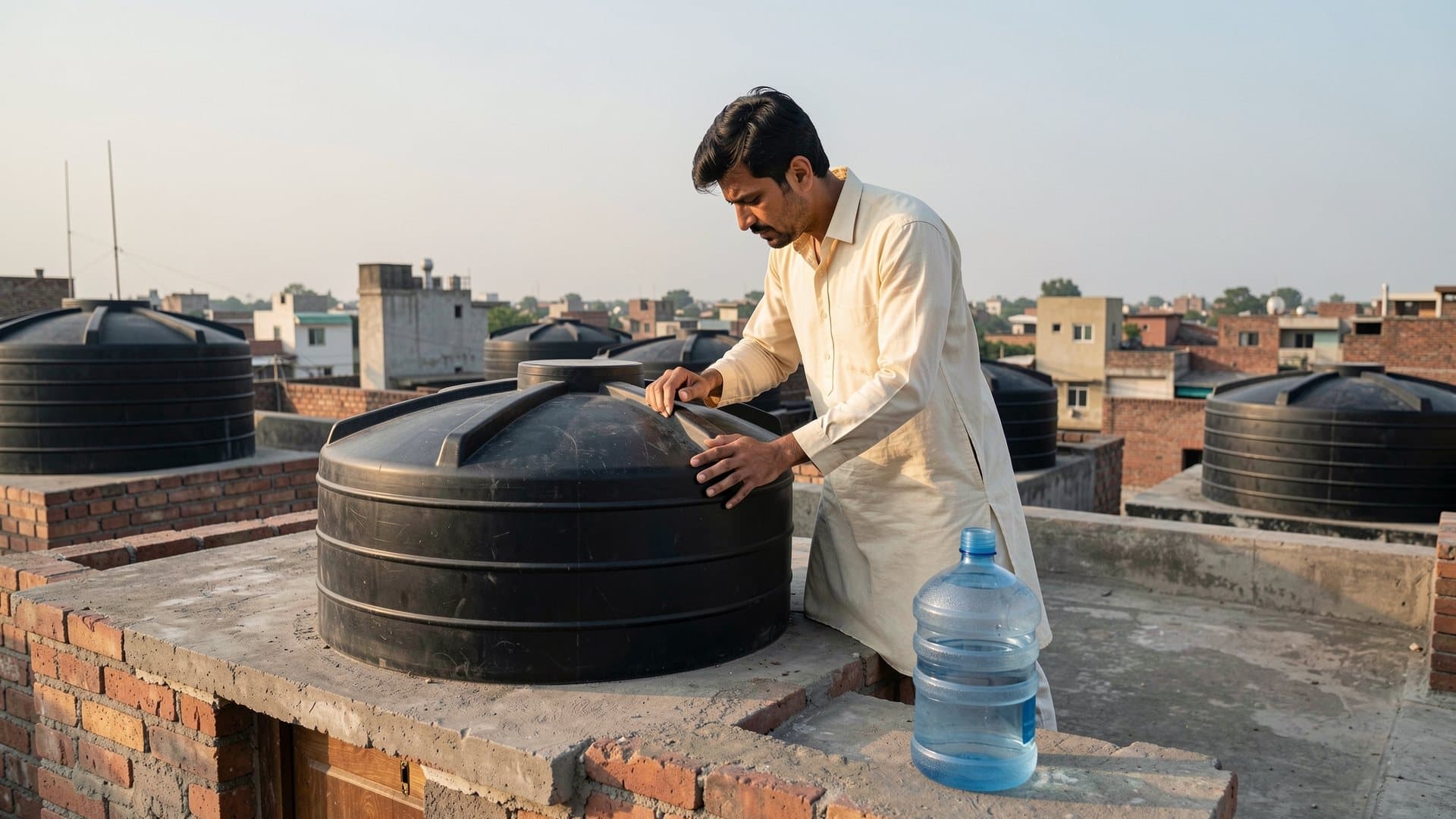
The tank on the roof or under the ground holds the most water in the house and is the one people look at least. A mosquito only needs a gap around the lid to get in.
- Make sure the lid fits tightly, with no cracks and no gap around the edge. Replace a broken lid; do not cover it with a loose sheet.
- Check the overflow pipe and vent: cover the opening with fine mesh so water can flow but mosquitoes cannot get in.
- Have the tank cleaned and scrubbed at least twice a year, and once before dengue season if you can.
- Look inside once a week during the season. Small wriggling larvae near the surface mean mosquitoes are already breeding.
Drums, buckets and stored water
Many homes keep extra water in drums or buckets for load-shedding hours or when the supply is irregular. Stored water is useful, but uncovered stored water during dengue season is exactly what the mosquito is looking for.
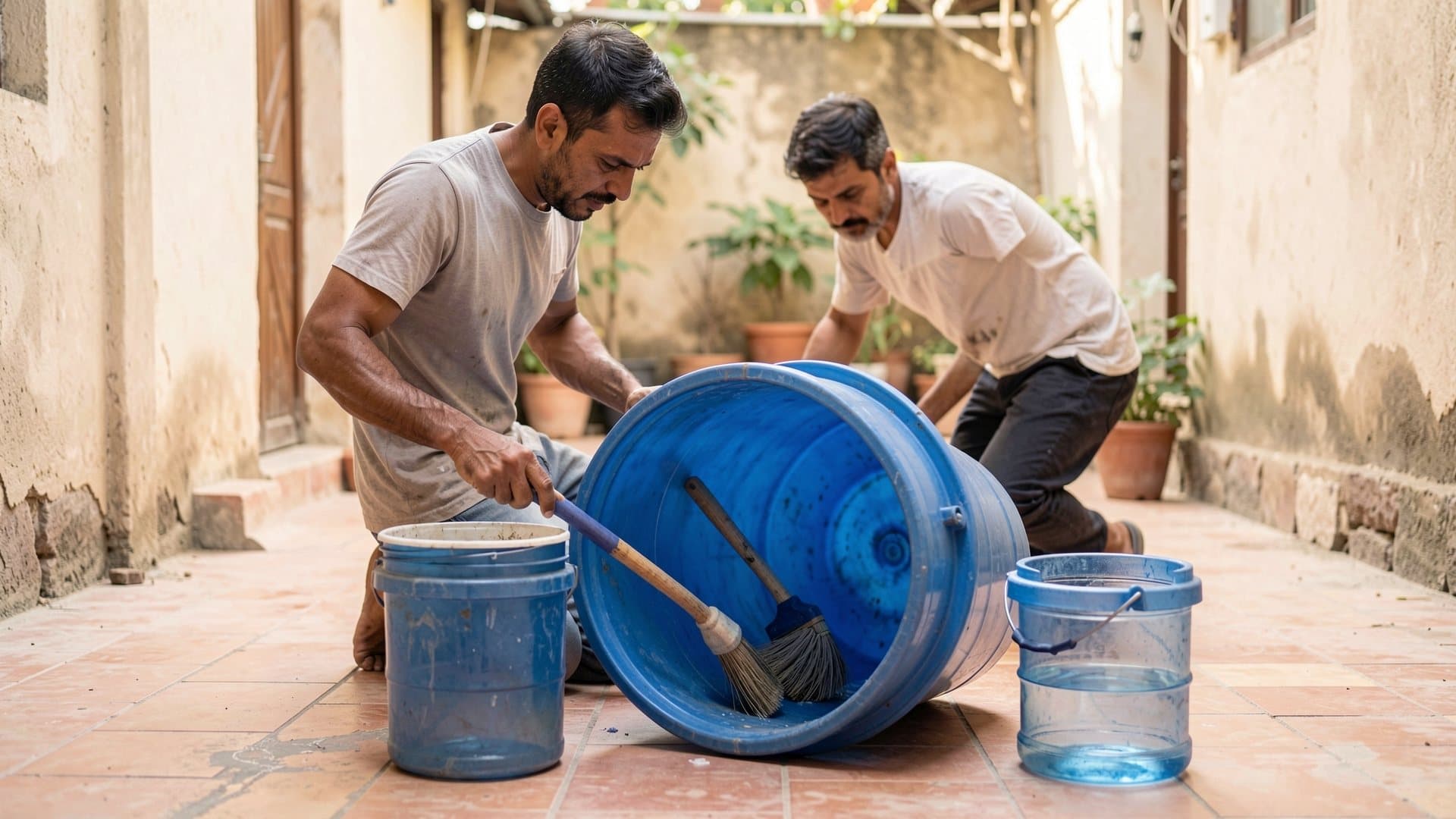
- Keep every drum and bucket of stored water covered with a tight lid, day and night.
- Once a week, empty it, scrub the inside walls with a brush, rinse and let it dry before refilling.
- Turn empty buckets, tubs and pots upside down so they cannot collect water.
- Store only as much water as you will use in a few days.
Small places people forget
Most breeding happens in small, ordinary containers that nobody thinks of as water storage. A quick walk around the house, roof and veranda once a week finds most of them.
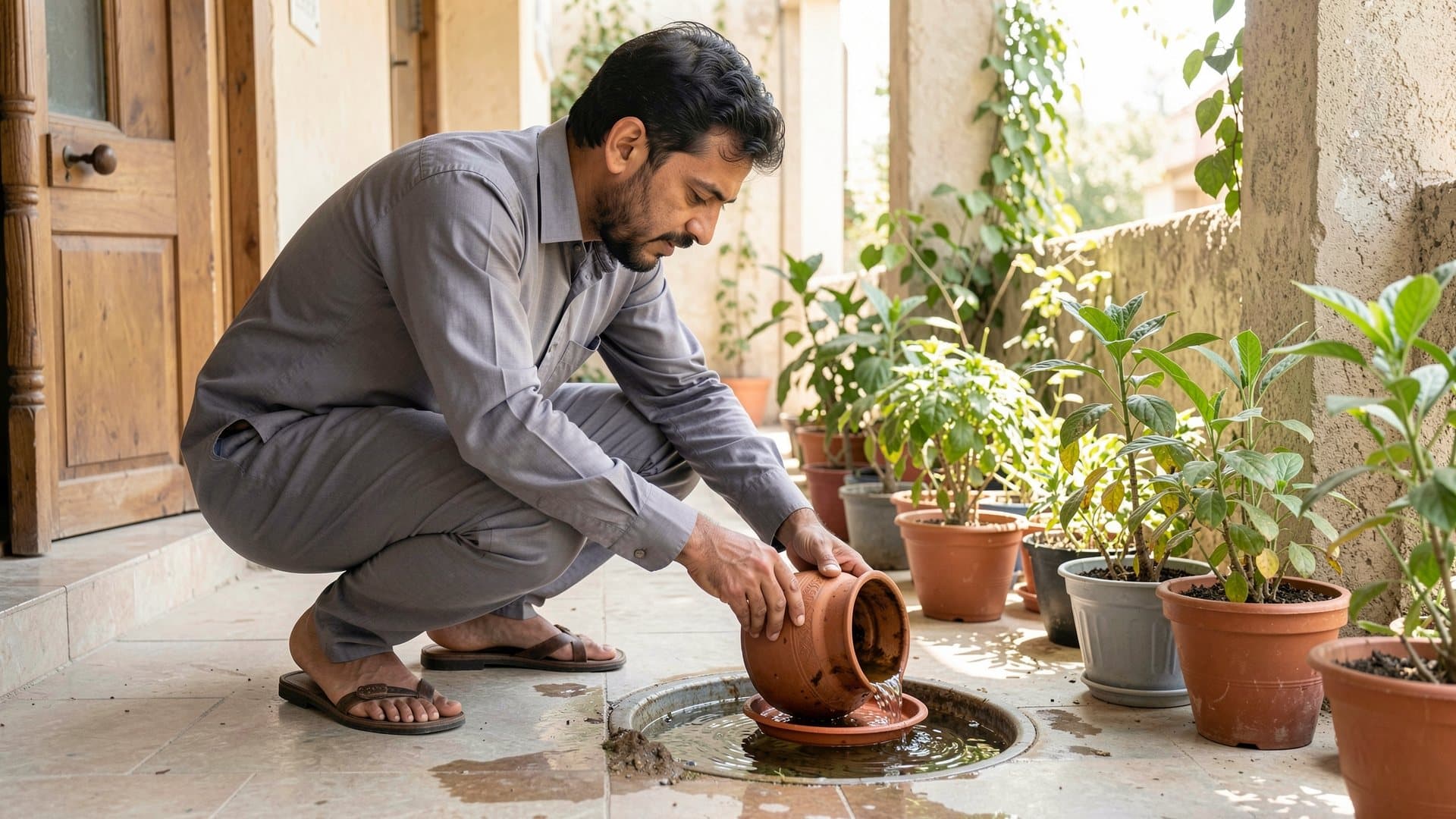
- Empty plant saucers once a week, or fill them with sand so they cannot hold water.
- Change the water in vases and pet bowls every day or two, and scrub them.
- Drain and dry air coolers that are no longer being used.
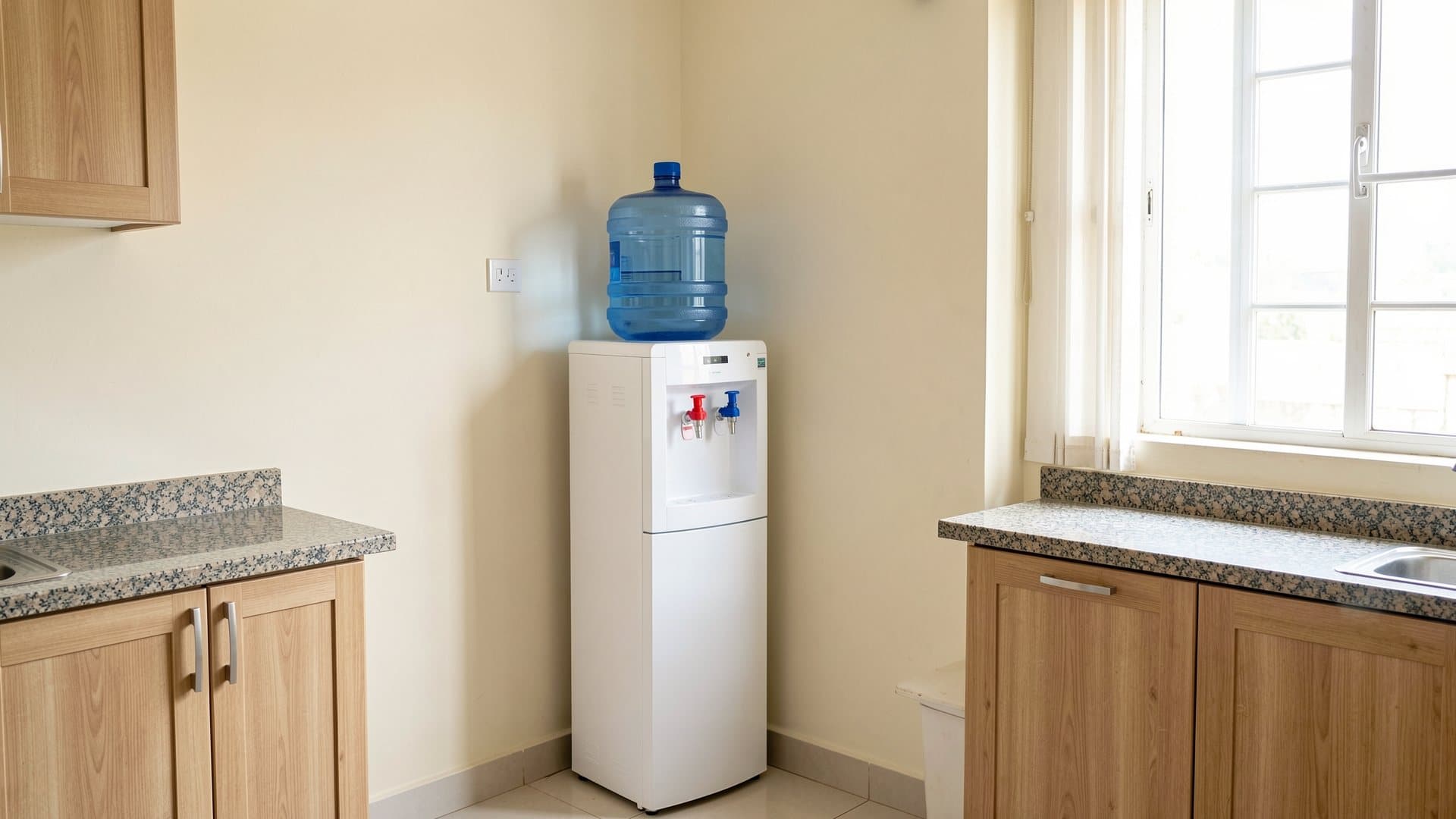
- Empty the drip tray under your fridge and water dispenser regularly. Our guide to home dispensers covers this.
- Clear the roof of old tyres, broken pots, tins and anything that can hold rainwater.
Your drinking water is not the problem, if it is sealed
Water in a sealed bottle cannot breed mosquitoes, and neither can water sitting on a dispenser with the bottle seated properly. Problems start when drinking water is poured into open jugs, pots or coolers and left standing. Keep drinking water in covered containers, and keep empty bottles capped and indoors until they are collected, so rainwater cannot gather in them.
Dengue mosquitoes are born at home, in clean water. Ten minutes a week with a brush and a lid does more than any spray.
A ten-minute weekly routine
- Pick one day each week, for example every Sunday morning.
- Check the tank lid and look inside the tank.
- Empty, scrub and dry drums, buckets, cooler trays, vases, pet bowls and plant saucers.
- Walk the roof and veranda and turn over or throw away anything that holds water.
- Keep everything that stores water tightly covered until next week.
Protect your family from bites too
- Fit mesh screens on windows and doors, and keep them closed in the early morning and evening.
- Wear full sleeves and long trousers outdoors, especially children going to school.
- Use mosquito repellent on exposed skin, and nets for babies and anyone sleeping during the day.
When to see a doctor
We are a water company, not doctors. During dengue season, a high fever with a severe headache, pain behind the eyes, muscle and joint pain, a rash, vomiting, or any bleeding from the gums or nose needs a doctor and a blood test straight away. Drink plenty of fluids, and do not take painkillers other than paracetamol without medical advice, because some common ones can make bleeding worse in dengue.
Frequently asked questions
- Where does the dengue mosquito breed?
- The Aedes mosquito that spreads dengue lays its eggs in clean, still water around homes: water tanks with loose lids, uncovered drums and buckets, cooler trays, plant saucers, vases, pet bowls and anything outdoors that collects rainwater.
- When is dengue season in Lahore?
- Cases usually rise after the monsoon and stay high through the warm autumn weeks, roughly September to November, falling once the nights turn cold.
- How often should water containers be cleaned during dengue season?
- Once a week. Empty them, scrub the inside walls with a brush because mosquito eggs stick there, rinse, let them dry and keep them tightly covered.
- Can mosquitoes breed in a water dispenser bottle?
- Not in a sealed bottle or one seated properly on a dispenser. The drip tray can collect standing water, so empty it regularly, and keep empty bottles capped so rain cannot collect in them.
- What should I do if someone has a fever during dengue season?
- See a doctor and get a blood test, especially if the fever comes with severe headache, pain behind the eyes, body aches, a rash or any bleeding. Keep them drinking fluids and avoid painkillers other than paracetamol unless a doctor advises otherwise.
Aabdar
Team
Lahore's bottled drinking water delivery service — founded 2026, PSQCA-certified, serving 5,000+ homes and offices across 12 areas of the city.

Comments & Discussion